
If you have spent any time researching bamboo for construction, furniture, or large-scale projects, you have almost certainly encountered two names: Guadua Angustifolia and Moso bamboo. They are the two most widely used structural bamboo species in the world, and the question of which one is stronger — and which one is right for your project — comes up constantly.
We have worked with Guadua Angustifolia exclusively for nearly twenty years. We know this species better than most. But we also know Moso well enough to give you an honest comparison — not a sales pitch.
Here is the full picture.
What is Moso Bamboo?
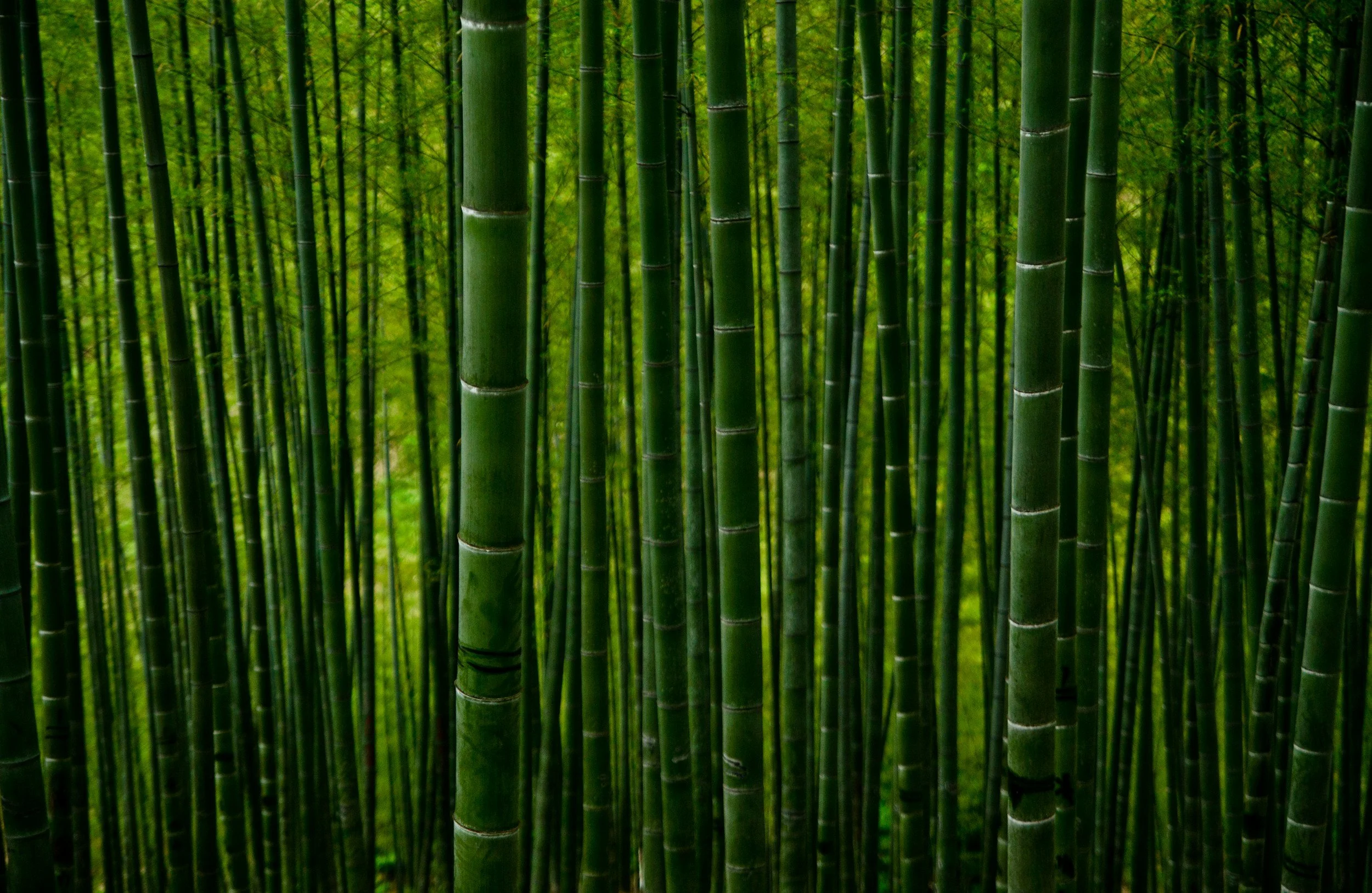
Moso bamboo (Phyllostachys edulis) is the most commercially traded bamboo species on the planet. It grows primarily in China, where it covers millions of hectares of managed forest and supports an enormous industrial manufacturing sector — from flooring and furniture to textiles and engineered panels.
Moso is fast-growing, widely available, and well-understood. It reaches harvestable maturity in around five years and grows to heights of 20 to 28 meters. Most of the bamboo products sold in large retail chains — flooring, cutting boards, kitchen utensils, decorative poles — are made from Moso.
It is a genuinely good material. But it is not the same as Guadua.
What is Guadua Angustifolia?
Guadua Angustifolia Kunth is the largest bamboo species native to the Americas, growing primarily in the Andean foothills of Colombia and Ecuador. Unlike Moso, Guadua is not a mass-produced commodity species. It grows in specific geographic conditions — volcanic soils, consistent rainfall, altitudes between 500 and 2,000 meters — and the best material in the world comes from Colombia's coffee region, where our plantation in Montenegro, Quindío has been producing certified Guadua for over thirty years.
While Moso dominates global bamboo trade in volume, Guadua dominates in structural performance. It is the preferred species of serious bamboo architects and engineers worldwide — and that preference is backed by data.
Strength Comparison: The Numbers
This is where the difference becomes very clear.
Tensile strength measures how much pulling force a material can withstand before breaking. This is the critical measurement for structural applications — columns, beams, trusses, and any element that bears load.
Guadua Angustifolia: Tensile strength exceeds that of mild steel. Modulus of elasticity approximately 17,204 N/mm².
Moso bamboo: Tensile strength is strong — roughly 150-280 N/mm² depending on age and section — but significantly lower than Guadua.
Wall thickness matters because it determines how much structural fiber is available in each culm section.
Guadua: Average wall thickness of 13mm, thicker at the base where the best structural sections come from.
Moso: Thinner walls, more variable between culms, typically 6-10mm depending on diameter.
Fiber density increases with altitude and soil quality. Guadua grown in the Colombian Andes at 1,000-1,500 meters above sea level produces exceptionally dense fiber — considerably denser than lowland Moso from Chinese managed forests.
The honest summary: for structural construction, Guadua Angustifolia is the stronger material by a significant margin.
Real-World Proof: The 1999 Colombia Earthquake
Numbers on paper are one thing. Real-world performance under extreme conditions is another.
In January 1999 a magnitude 6.2 earthquake struck Colombia's coffee region — the same Andean zone where Guadua grows and where most Guadua construction is concentrated. The earthquake killed over 1,000 people and destroyed thousands of buildings.
Engineers surveying the damage found a consistent pattern: structures built with Guadua bamboo suffered little to no structural damage while adjacent concrete and brick buildings collapsed or were severely damaged.
This was not an accident. Guadua's combination of tensile strength, flexibility, and natural geometry — a hollow tube — makes it one of the most effective seismic-resistant building materials available. The Colombian government subsequently incorporated Guadua into its national building code as a formally recognized structural and seismic-resistant material.
Moso has no equivalent real-world validation at this scale.
Where Moso Wins
A fair comparison acknowledges where Moso has real advantages.
Availability and price: Moso is produced at industrial scale in China and is significantly cheaper and more widely available than Guadua. If you are buying bamboo flooring, furniture components, or panels for mass-market retail, Moso is the practical choice.
Engineered products: The engineered bamboo industry — strand-woven flooring, laminated beams, cross-laminated bamboo panels — is built almost entirely on Moso. The processing infrastructure in China is unmatched. If your project requires engineered bamboo products at scale, Moso is currently the dominant option.
Diameter consistency: Moso grown in managed Chinese plantations tends to be more uniform in diameter than wild-harvested or semi-managed Guadua. For industrial processing this matters.
Where Guadua Wins
For structural whole-culm applications — the kind of bamboo construction where poles are used as columns, rafters, beams, and trusses — Guadua is the clear choice for serious builders and architects.
Structural integrity: The tensile strength, wall thickness, and fiber density of mature Guadua culms from the Colombian Andes make it the strongest naturally occurring hollow structural material available anywhere.
Seismic performance: As demonstrated in 1999, Guadua structures flex and absorb seismic energy rather than shattering. This is a critical consideration for building in earthquake-prone regions.
Aesthetic quality: Guadua culms have a distinctive natural beauty — the characteristic golden color from sun-bleaching, the visible bamboo nodes, the consistent taper. Architects working with exposed bamboo structure consistently prefer Guadua for its visual quality.
Certification and traceability: Our Guadua carries a CRQ certification of origin — guaranteeing that every pole we export has been sustainably harvested from a certified plantation in Colombia with full environmental compliance. Traceability at this level is rare in the Moso market.
Carbon sequestration: Guadua forests in the Colombian Andes are among the most efficient carbon sinks in the tropical Americas — sequestering significantly more CO₂ per hectare per year than equivalent Moso forests in China.
Which Species is Right for Your Project?
The answer depends on what you are building.
Choose Moso if:
You need engineered bamboo products (flooring, panels, strand-woven)
You are buying for mass-market retail or consumer products
Price and availability are the primary considerations
You need consistent small-diameter material for furniture or crafts
Choose Guadua if:
You are building a structural bamboo project — a home, hotel, pavilion, bridge, or large installation
Your project is in a seismic zone
You need the strongest available whole-culm bamboo
You want certified, traceable material with full chain of custody
You are working with a bamboo architect or structural engineer who specifies material performance
What the World's Best Bamboo Architects Use
This is perhaps the most telling data point of all.
Simón Vélez — widely regarded as the world's most celebrated bamboo architect, with over 300 projects across five continents — works exclusively with Guadua Angustifolia. His landmark structures, including the pavilion we supplied for the Aqua Mater exhibition in Paris in 2022, are built with Colombian Guadua.
Structural engineers who specify bamboo for serious architectural projects — including our engineering partner Esteban Morales, who has calculated over 25 bamboo structures across four continents — consistently select Guadua for load-bearing applications.
When the people who understand bamboo most deeply make their material choice, they choose Guadua.
Our Guadua Bamboo Poles
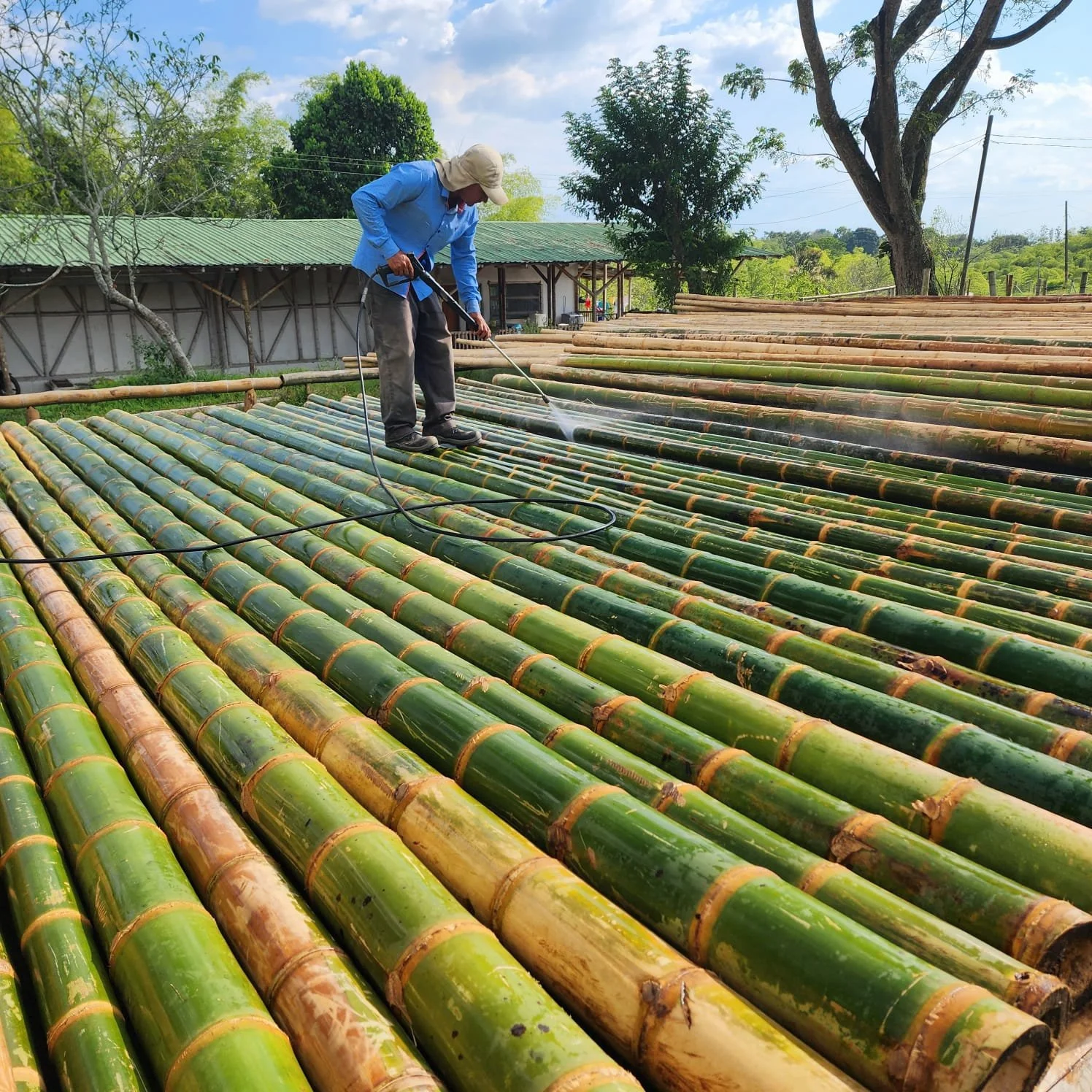
At The Best Bamboo® we grow, harvest, and export certified Guadua Angustifolia from our own plantation in Montenegro, Colombia. Our poles are available in diameters from 2 inches to 7 inches and lengths from 3 feet to 40 feet, boron-treated to NTC 5301 standard for a lifespan of 30+ years.
We supply wholesale container orders to distributors, architects, and construction companies worldwide, and retail orders through our US distribution network.
If you are planning a bamboo construction project and want to use the strongest, most certified bamboo available, contact us directly:
Email: bamboo@thebestbamboo.com
WhatsApp: +57 323 224 0640
We reply within 24 hours and ship to more than 30 countries worldwide.
The Best Bamboo® is a direct exporter of certified Guadua Angustifolia bamboo from Colombia. Our plantation in Montenegro, Quindío has been producing premium structural bamboo for nearly three decades. All our bamboo is CRQ certified and harvested in compliance with Colombian environmental regulations.
The Best Bamboo: Guadua Angustifolia