
Guadua Bamboo — World's Strongest Bamboo | The Best Bamboo®
If you have ever searched for bamboo poles for construction, fencing, or architectural projects, you have almost certainly come across the name Guadua Angustifolia. But what exactly is it, why does it matter, and why do architects, builders, and bamboo experts around the world treat it differently from every other bamboo species on the planet?
After nearly twenty years of growing, harvesting, and exporting Guadua from our plantation in Montenegro, Colombia, we have answered this question thousands of times. Here is the most honest, complete answer we can give you.
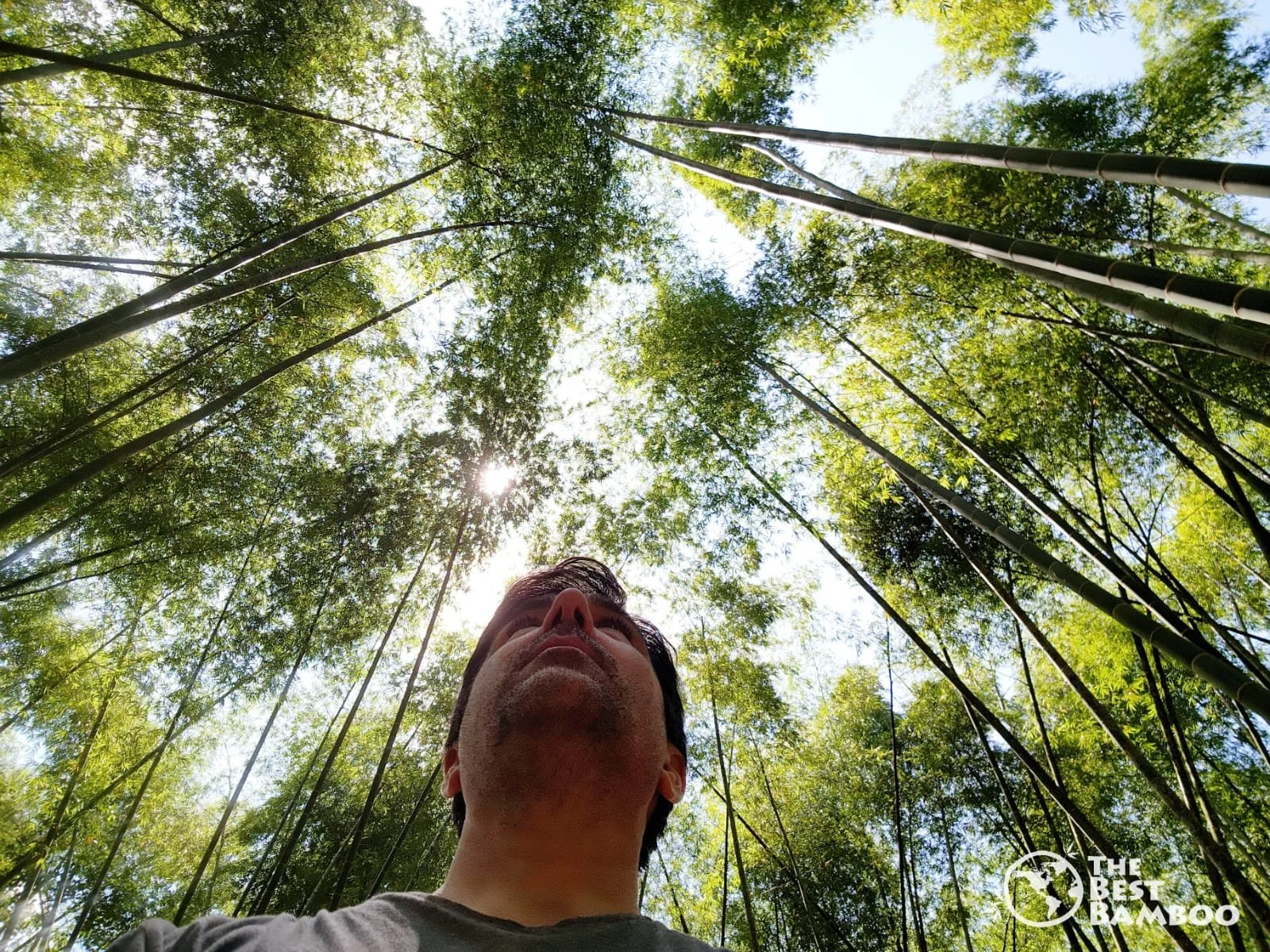
Guadua Angustifolia bamboo plantation in Montenegro, Quindío, Colombia — source of all The Best Bamboo® export products.
What is Guadua Angustifolia?
Guadua Angustifolia Kunth is a species of giant tropical bamboo native to the Andean regions of Colombia and Ecuador. The name comes from the Quechua word guadúa, used by indigenous communities in the Andes for centuries to describe this specific plant. The species classification Angustifolia — meaning "narrow-leaved" in Latin — distinguishes it from other members of the Guadua genus.
It is the largest bamboo species native to the Americas, regularly reaching heights of 15 to 25 meters and diameters of up to 22 centimeters at the base. But size alone does not explain why engineers, architects, and builders from Mexico to Thailand specifically request Guadua Angustifolia for serious structural projects.
The reason comes down to what happens inside the culm.
Why is Guadua Called the World's Strongest Bamboo?
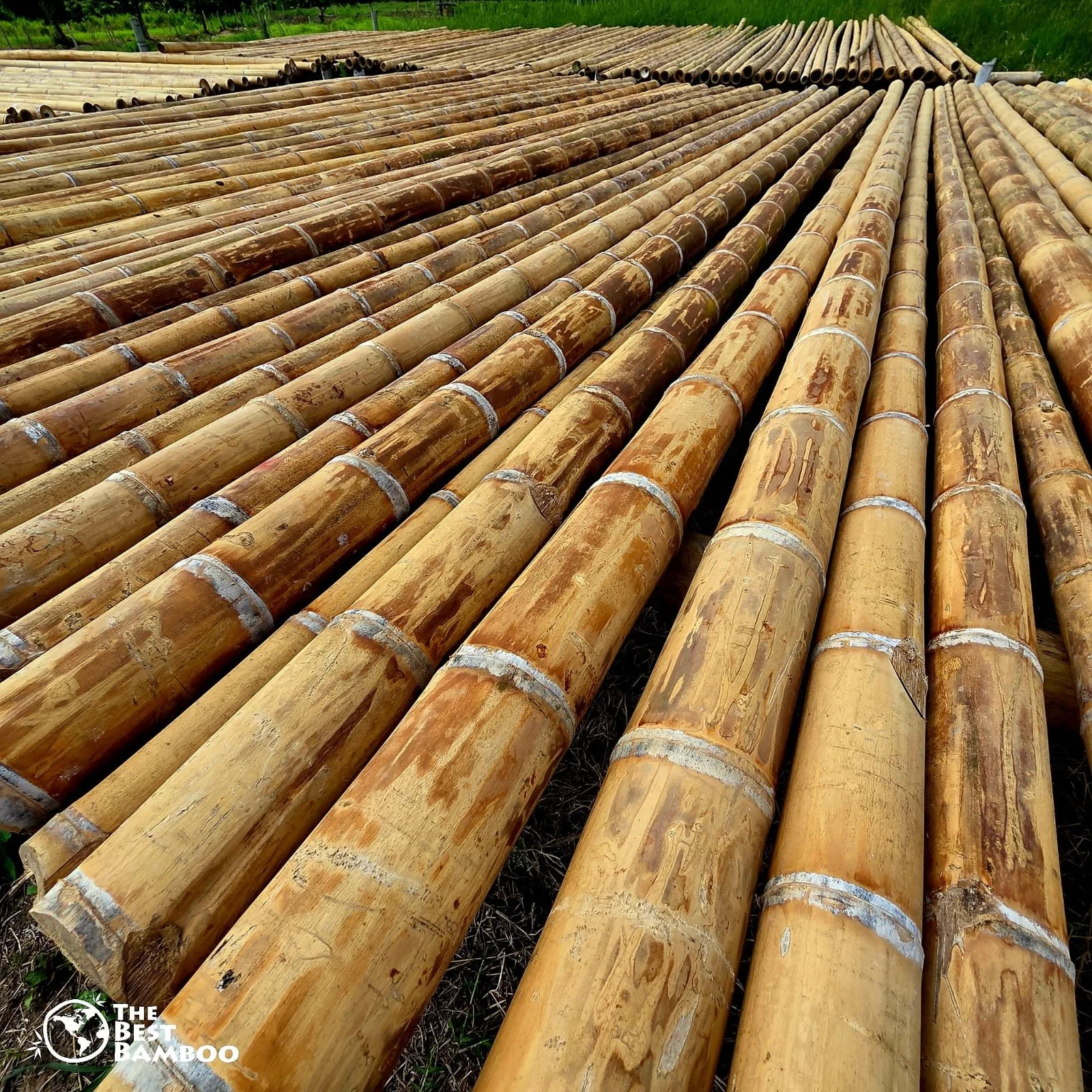
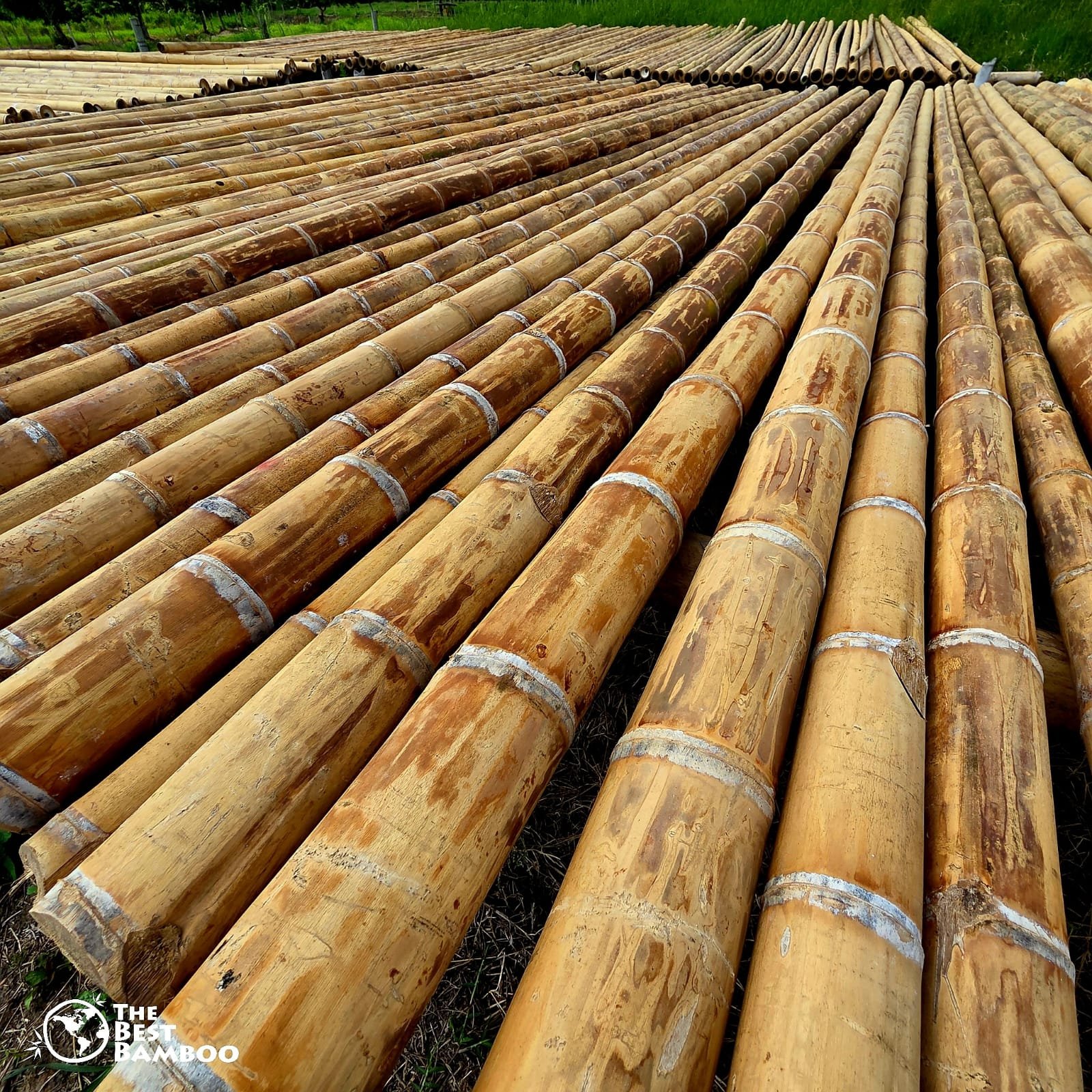
Freshly harvested Guadua Angustifolia poles sun-bleaching at our plantation in Montenegro, Colombia — a natural process that gives the bamboo its characteristic golden color.
Bamboo is often described as a strong material. But not all bamboo species are created equal. Moso bamboo, the most commonly traded species in the world, is strong. Dendrocalamus asper, grown across Southeast Asia, is also widely used in construction. Both are good materials.
Guadua Angustifolia is different.
The tensile strength of Guadua Angustifolia — that is, its resistance to being pulled apart — exceeds that of mild steel. Its modulus of elasticity, a measure of stiffness, reaches approximately 17,204 N/mm². Its fibers are dense, its wall thickness substantial (averaging around 13mm, thicker near the base where the best structural sections come from), and its natural geometry — a hollow tube — is one of the most efficient structural forms in engineering.
These numbers have real-world consequences. After a magnitude 6.2 earthquake struck Colombia's coffee-growing region in 1999, structural engineers surveyed the damage across thousands of buildings. Structures built with Guadua bamboo suffered little to no damage. The Colombian government subsequently incorporated Guadua into its national building code as a recognized seismic-resistant construction material — one of only a handful of countries in the world to formally certify bamboo for structural use.
Where Does Guadua Angustifolia Grow?
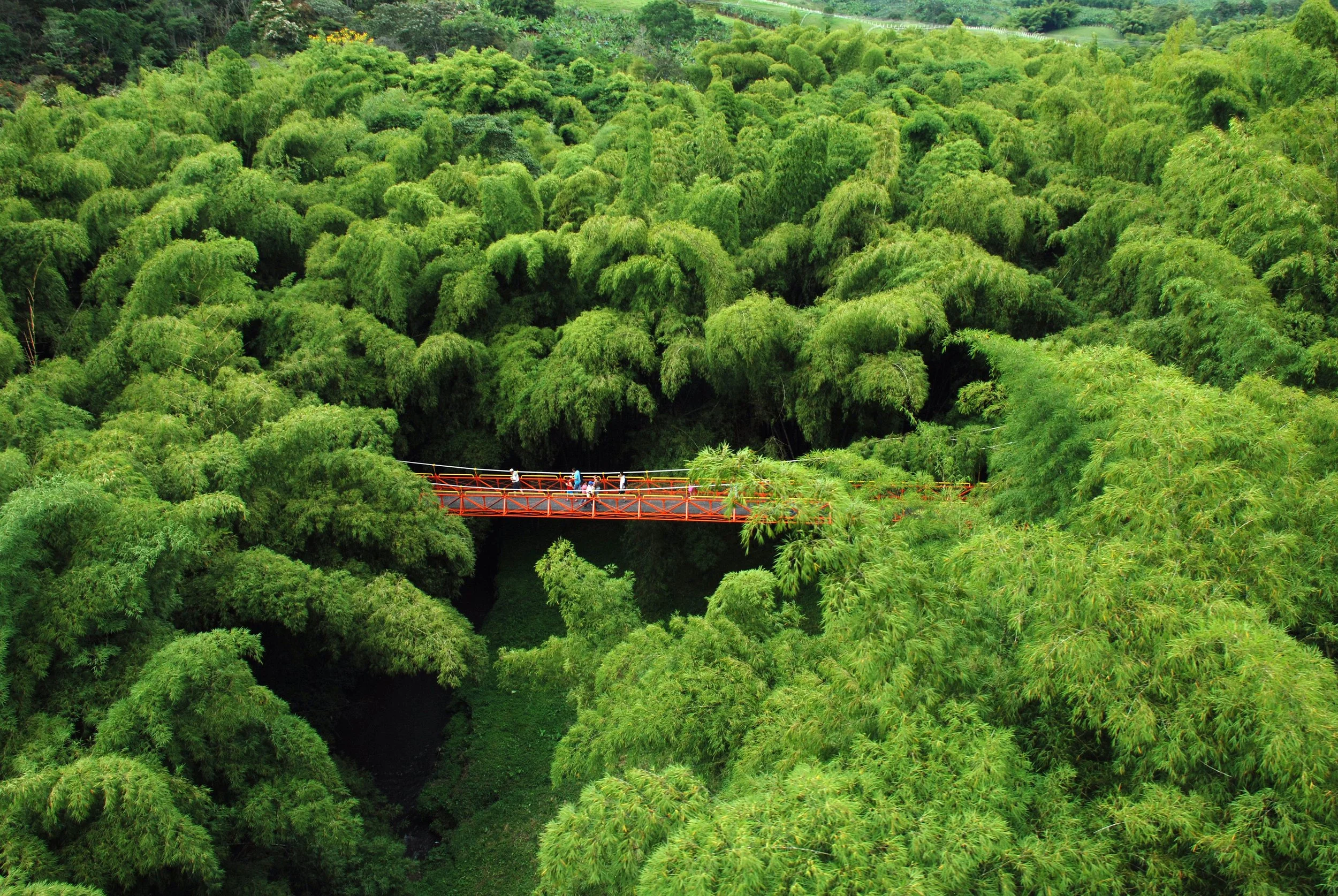
Montenegro, Quindío, Colombia — located in the heart of the Andean bamboo belt, our plantation benefits from volcanic soils, consistent rainfall, and ideal altitude for producing the world's finest Guadua Angustifolia.
Guadua Angustifolia thrives in the tropical Andean foothills of Colombia and Ecuador, at altitudes between 500 and 2,000 meters above sea level. The combination of volcanic soils, consistent rainfall, and temperature variation at these elevations produces bamboo with an exceptionally dense fiber structure.
Colombia's coffee region — the Eje Cafetero, covering the departments of Quindío, Risaralda, Caldas, and Valle del Cauca — has historically been the center of Guadua cultivation. Our own plantation in Montenegro, in the Quindío department, sits at the heart of this region. The plantation is over thirty years old, which matters: mature Guadua culms cut from established rhizome systems are structurally superior to bamboo grown in younger plantations.
Outside Colombia and Ecuador, Guadua Angustifolia has been successfully cultivated in parts of Central America, Brazil, and other tropical regions, though the material quality from the Andean foothills remains the benchmark.
How is Guadua Bamboo Harvested?
Guadua bamboo reaches structural maturity at four to six years of age. Before that point, the culm is still developing its fiber density and is not suitable for construction or export. Harvesting too early is one of the most common causes of premature failure in bamboo structures — a problem that does not occur when bamboo is properly selected at maturity.
Atour plantation, each culm is assessed individually before cutting. Only mature culms with no visible cracks, insect damage, or irregular growth are selected. The base sections — where wall thickness is greatest — are prioritized for structural poles. Upper sections with thinner walls and smaller diameters are used for bamboo stakes, split poles, and other applications.
After harvesting, the culms are treated using the borax-boric acid method following Colombia's NTC 5301 standard — an eco-friendly, non-toxic treatment that protects against termites, beetles, and fungal attack. Treated correctly, Guadua bamboo poles last more than thirty years.
What is Guadua Bamboo Used For?
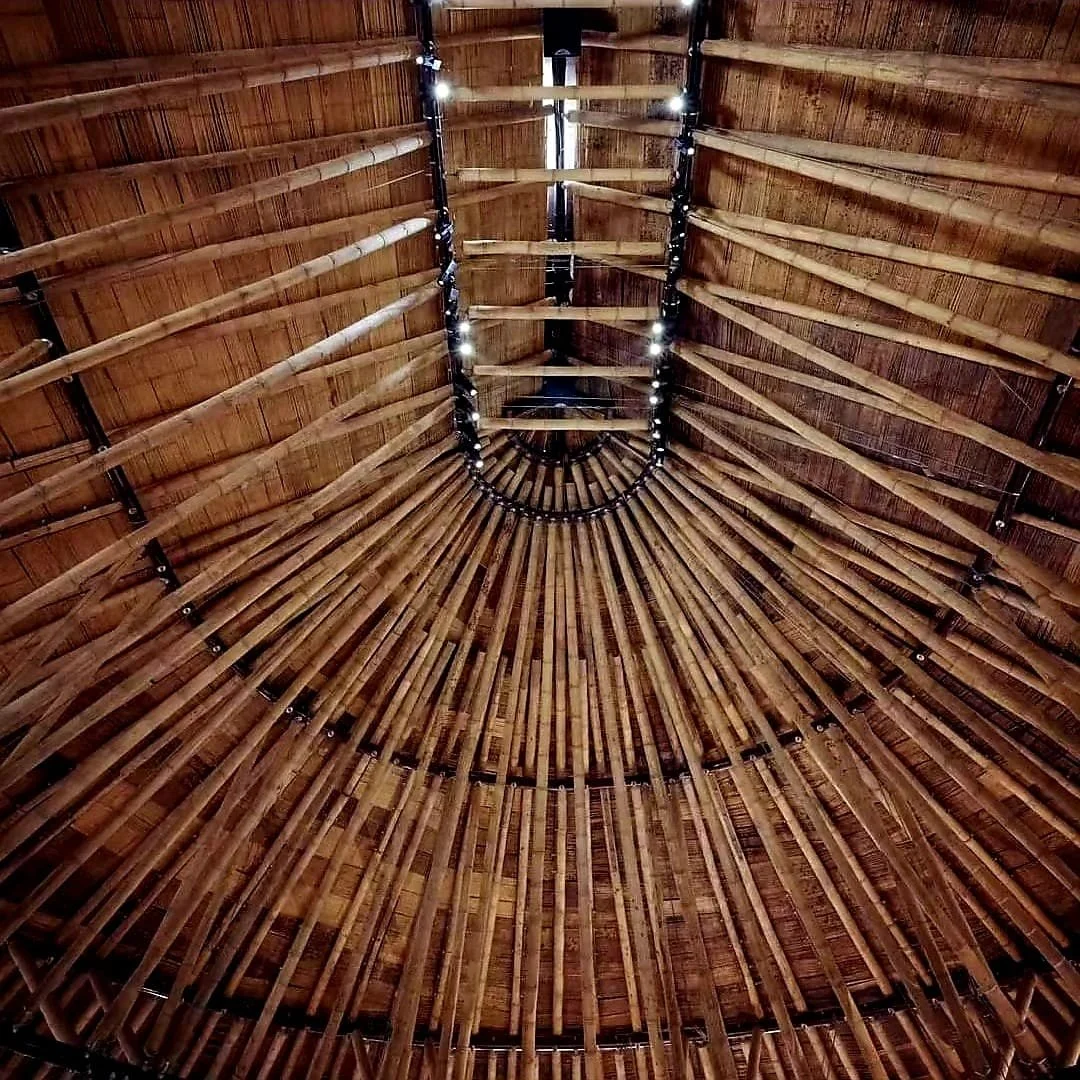
September 2022, Paris, France — The Best Bamboo® supplied all Guadua bamboo materials for this iconic pavilion designed by Simon Velez, built to house the Aqua Mater photography exhibition by legendary photographer Sebastiao Salgado.
The range of applications for Guadua Angustifolia is broader than most people expect.
Structural construction is the most demanding application and the one that sets Guadua apart from other bamboo species. Full culms are used as columns, beams, rafters, and trusses in homes, hotels, schools, bridges, and pavilions. Architect Simon Vélez, the most celebrated bamboo architect in the world, has built over 300 structures worldwide using Guadua — and we are proud to have supplied materials for his iconic pavilion at the Aqua Mater exhibition by photographer Sebastião Salgado in Paris in September 2022.
Bamboo slats and strips cut from split Guadua culms are widely used for wall paneling, ceiling cladding, furniture, and interior design. Our slats come in widths of 20 to 45 mm and lengths up to 6 meters.
Bamboo privacy screens made from whole or half-round Guadua poles are popular for pool enclosures, garden fencing, patio dividers, and commercial landscaping.
Crushed bamboo mats — known in Colombia as esterilla de Guadua — are made by splitting and flattening culms into flat panels. They are used extensively in construction as wall infill, roofing underlay, and fiber for engineered bamboo products like flooring and beams.
Bamboo stakes cut from the top sections of the culm are used in agriculture, horticulture, and nursery applications worldwide. Their natural straightness, strength, and eco-credentials make them a preferred alternative to wooden and plastic stakes.
How Does Guadua Compare to Other Bamboo Species?
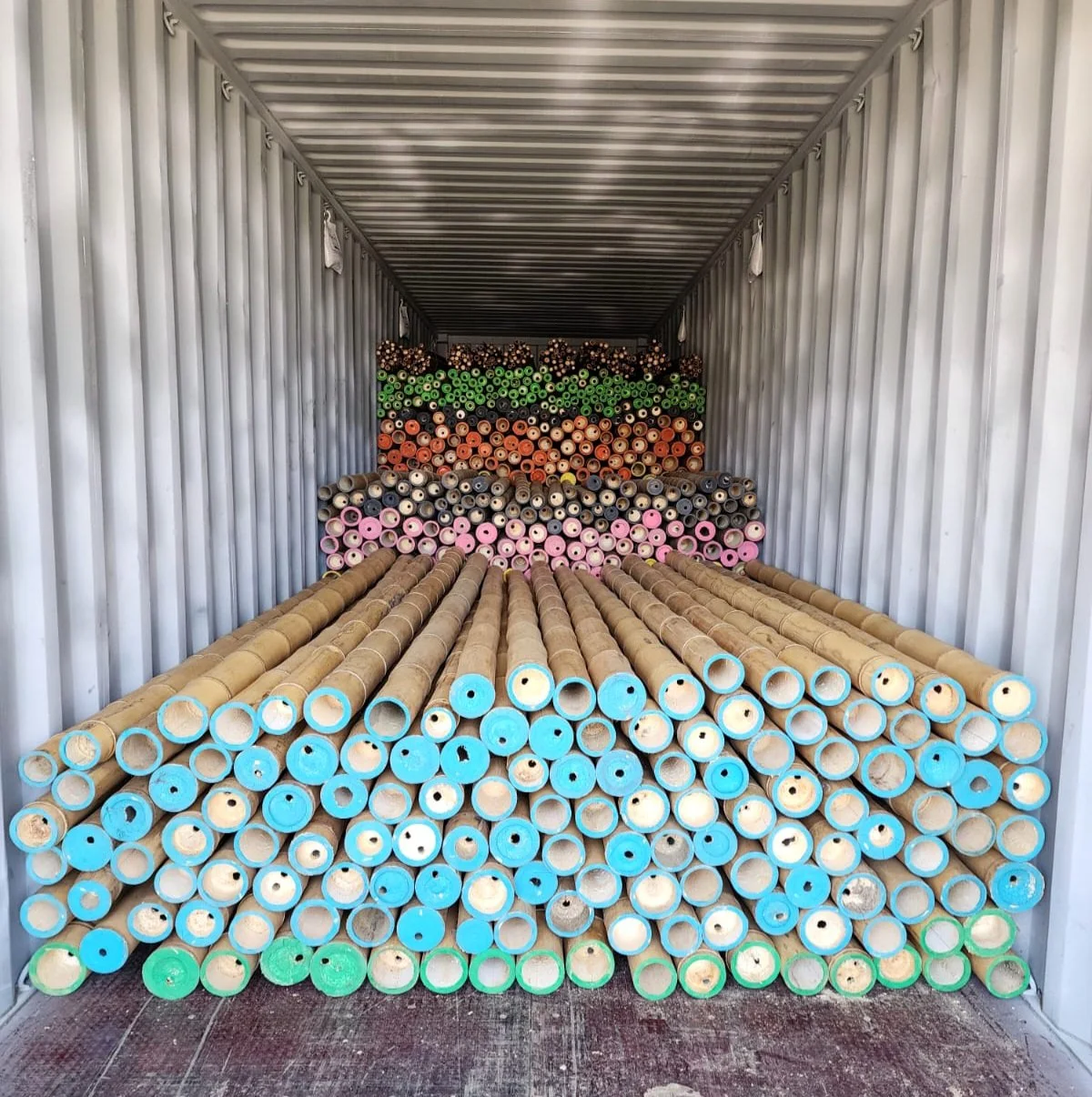
Guadua Angustifolia bamboo poles being loaded for export at our plantation in Montenegro, Colombia. We ship over 24 containers annually to customers across North America, Europe, Asia and beyond.
The question we are asked most often by architects and engineers comparing bamboo species is straightforward: *why Guadua instead of Moso?*
Moso bamboo (Phyllostachys edulis) is the most widely traded bamboo in the world. It grows in China, is produced at massive industrial scale, and is readily available globally. It is a perfectly good material for furniture, flooring, and light construction.
For serious structural applications — the kind where a building needs to withstand wind loads, seismic activity, or long-term weathering — Guadua Angustifolia outperforms Moso in tensile strength, wall thickness, and structural predictability. The hollow geometry of a mature Guadua culm is more consistent than Moso, which tends to be more variable in wall thickness and density.
The other species worth comparing is Dendrocalamus asper, widely used in Southeast Asia. It is comparable to Guadua in size and structural performance, and it is the preferred species in regions where Guadua is not cultivated. Where Guadua wins is in certification and supply chain traceability — particularly from Colombia, where our CRQ certification of origin guarantees the provenance and sustainable harvest of every pole we ship.
Is Guadua Bamboo Sustainable?
Bamboo is frequently marketed as sustainable without much explanation of what that means. For Guadua specifically, the sustainability credentials are concrete.
Guadua bamboo reaches harvestable maturity in four to six years — compared to 25 to 50 years for structural timber species depending on the species. The rhizome system that produces new culms is never destroyed during harvesting, meaning the plantation continues producing indefinitely without replanting. A managed Guadua stand is a fast-cycling, carbon-storing crop, with published figures for standing carbon ranging from roughly 76 to over 300 tonnes of CO₂ per hectare depending on age, site and whether soil carbon is included.
Our plantation in Montenegro operates under certification from CRQ — the Corporación Autónoma Regional del Quindío — which governs sustainable harvest volumes, environmental compliance, and traceability from our plantation to your warehouse. For every shipment, we also work with regional environmental corporations CARDER, CVC, and CAR depending on the origin of each harvest.
Where Can You Buy Guadua Angustifolia Bamboo Poles?
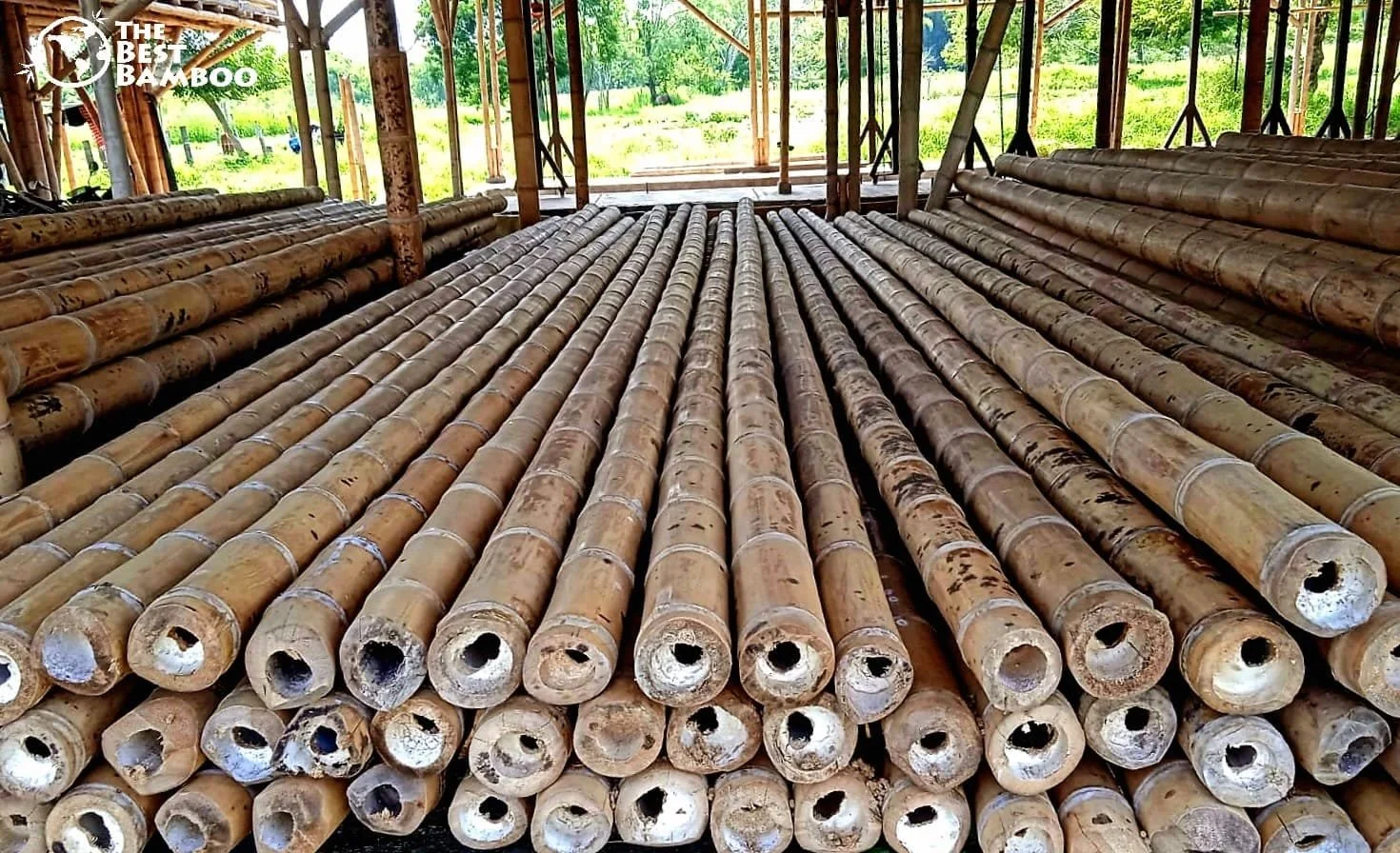
Grade A Guadua Angustifolia bamboo poles at our warehouse in Colombia — hand selected, CRQ certified, and ready for export. Every pole we ship meets our strict quality standards for diameter consistency, wall thickness, and treatment.
We export Guadua Angustifolia bamboo poles, slats, screens, mats, and stakes worldwide from our plantation in Montenegro, Colombia. We supply wholesale container orders to distributors, architects, and construction companies globally, and retail orders through our US distribution network.
If you are planning a bamboo construction project, a landscaping installation, or a large retail order, contact us directly:
Email: bamboo@thebestbamboo.com
WhatsApp: +57 323 224 0640
We reply within 24 hours and ship to more than 30 countries worldwide.
The Best Bamboo® is a direct exporter of certified Guadua Angustifolia bamboo from Colombia. Our plantation in Montenegro, Quindío, has been producing premium bamboo for nearly two decades. All our bamboo is CRQ certified and harvested in compliance with Colombian environmental regulations.